Explore the Planets: A Journey Through Our Amazing Solar System

Explore the Planets: A Journey Through Our Amazing Solar System

Explore the Planets: A Journey Through Our Amazing Solar System

Ever wondered what’s really out there? Explore the planets and wonders of our solar system in this fun and fascinating guide.

☀️ The Sun: Our Life-Giving Star

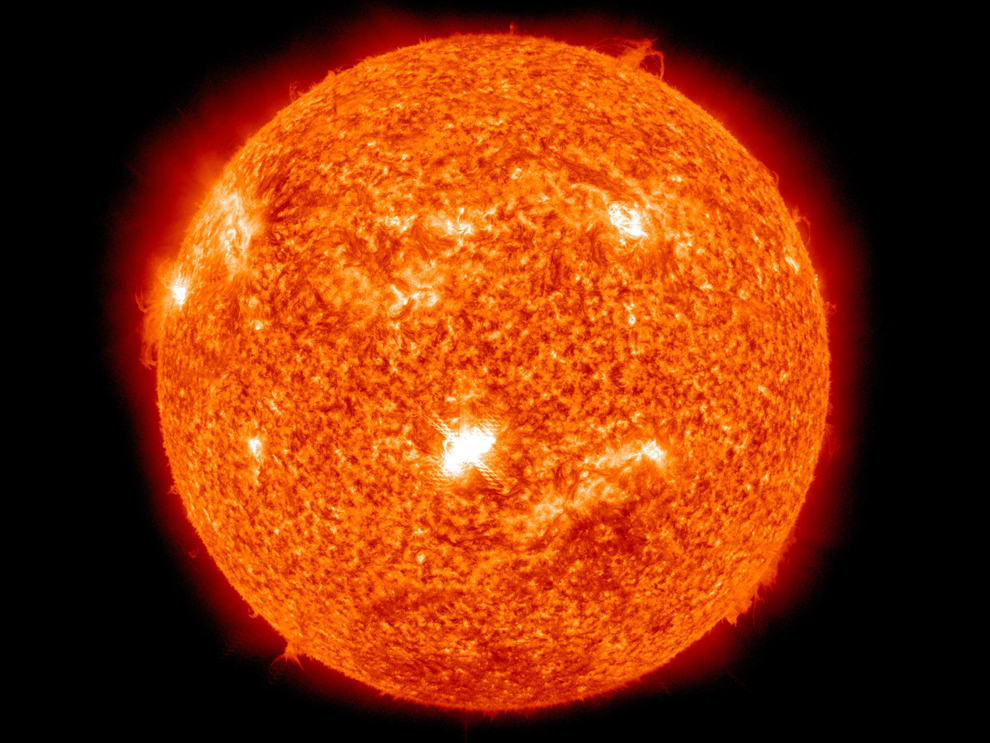
Sun with solar flares

The Sun is the center of our solar system, a massive glowing ball of hydrogen and helium that powers all life on Earth.

๐ŸŒ‘ Mercury: The Swift and Scorched Planet

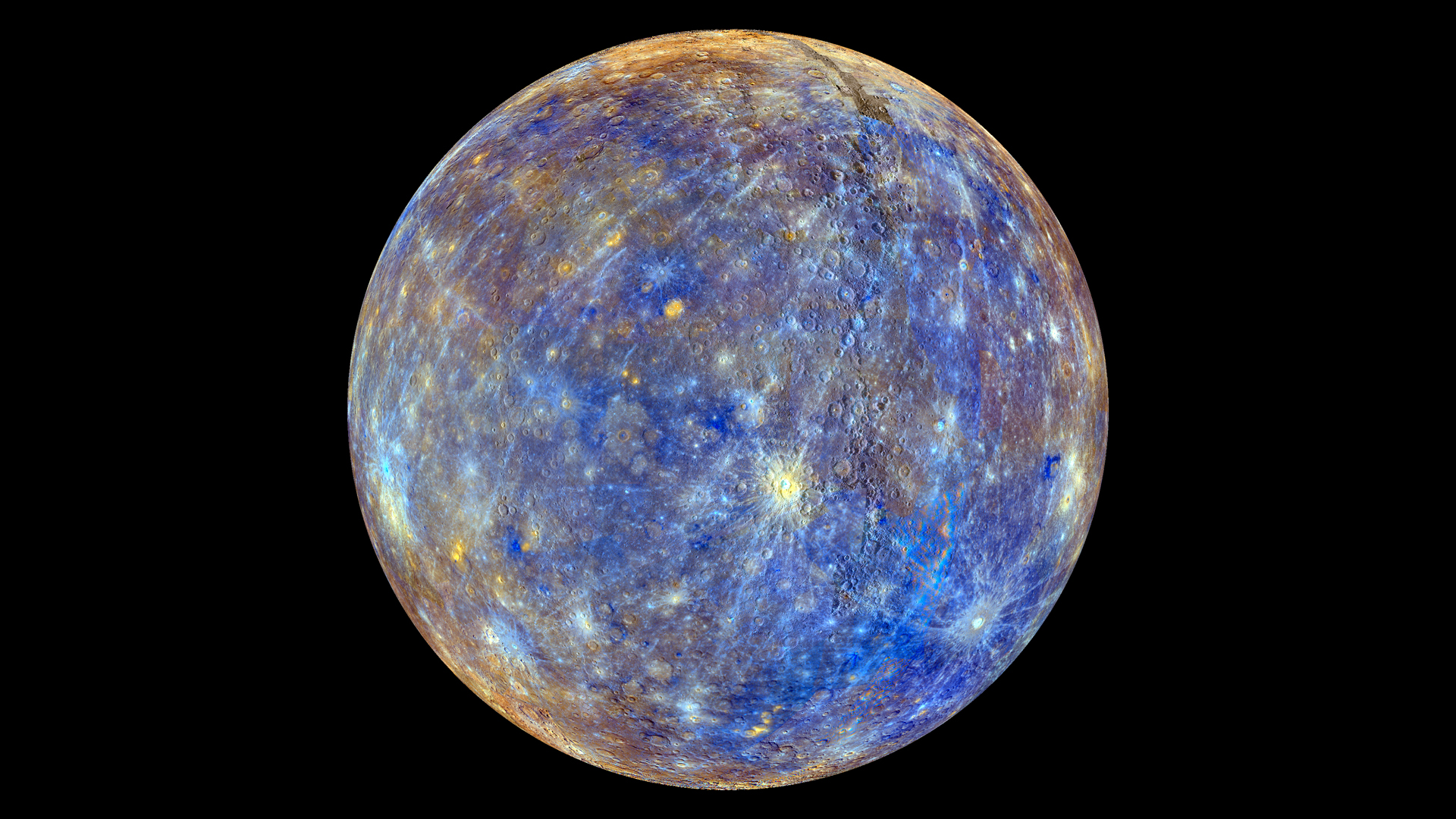
Mercury planet surface close-up

Mercury is the smallest and fastest planet, closest to the Sun, with extreme temperatures and a heavily cratered surface.

๐ŸŒ‹ Venus: Earth’s Fiery Twin

Thick atmosphere of Venus

Venus is similar in size to Earth but has a toxic, heat-trapping atmosphere, making it the hottest planet in the solar system.

๐ŸŒ Earth: The Only Known Planet with Life

Earth from Apollo missions

Our home planet is a unique world, with vast oceans, life-sustaining air, and a protective magnetic field.

๐Ÿ”ด Mars: The Red Planet and Future Home?

Mars surface and rocks

Mars is a cold, dusty desert world that may have once had water — and perhaps even life. Could humans live there one day?

๐Ÿช Jupiter: The Solar System Giant

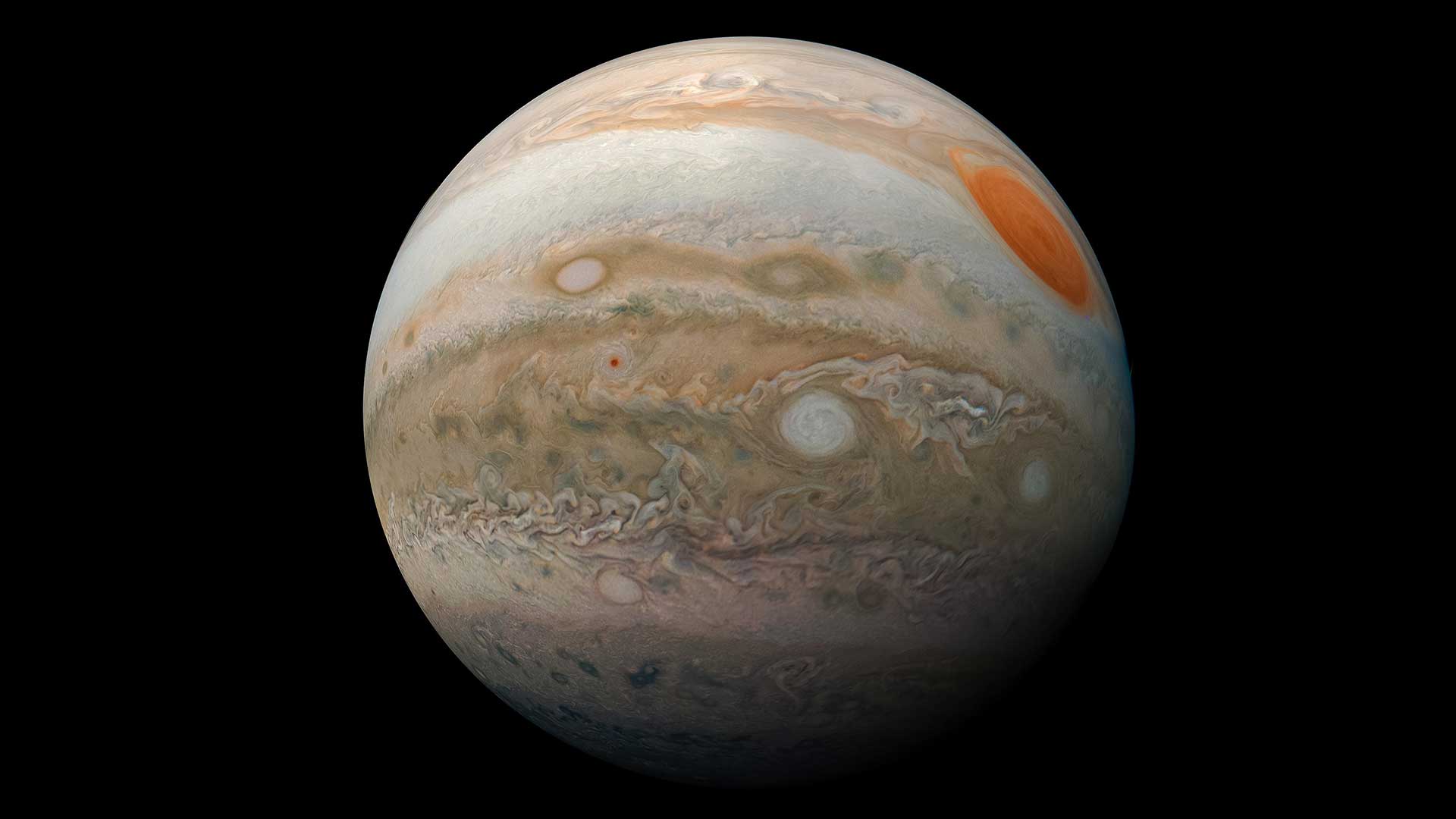
Jupiter close-up with storm

Jupiter is the largest planet in our solar system with powerful storms, dozens of moons, and a magnetic field to match.

๐Ÿ’ Saturn: Beauty with Rings

Saturn rings from Cassini spacecraft

Saturn is famous for its spectacular ring system and many moons, including Titan, a moon with liquid methane lakes.

๐ŸŒ€ Uranus: The Tilted Ice Giant

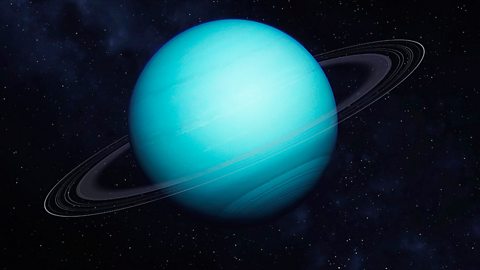
Sideways spinning Uranus

Uranus spins on its side and appears pale blue due to its methane-rich atmosphere. It’s one of the coldest planets in the solar system.

๐ŸŒŠ Neptune: The Windy Blue Giant

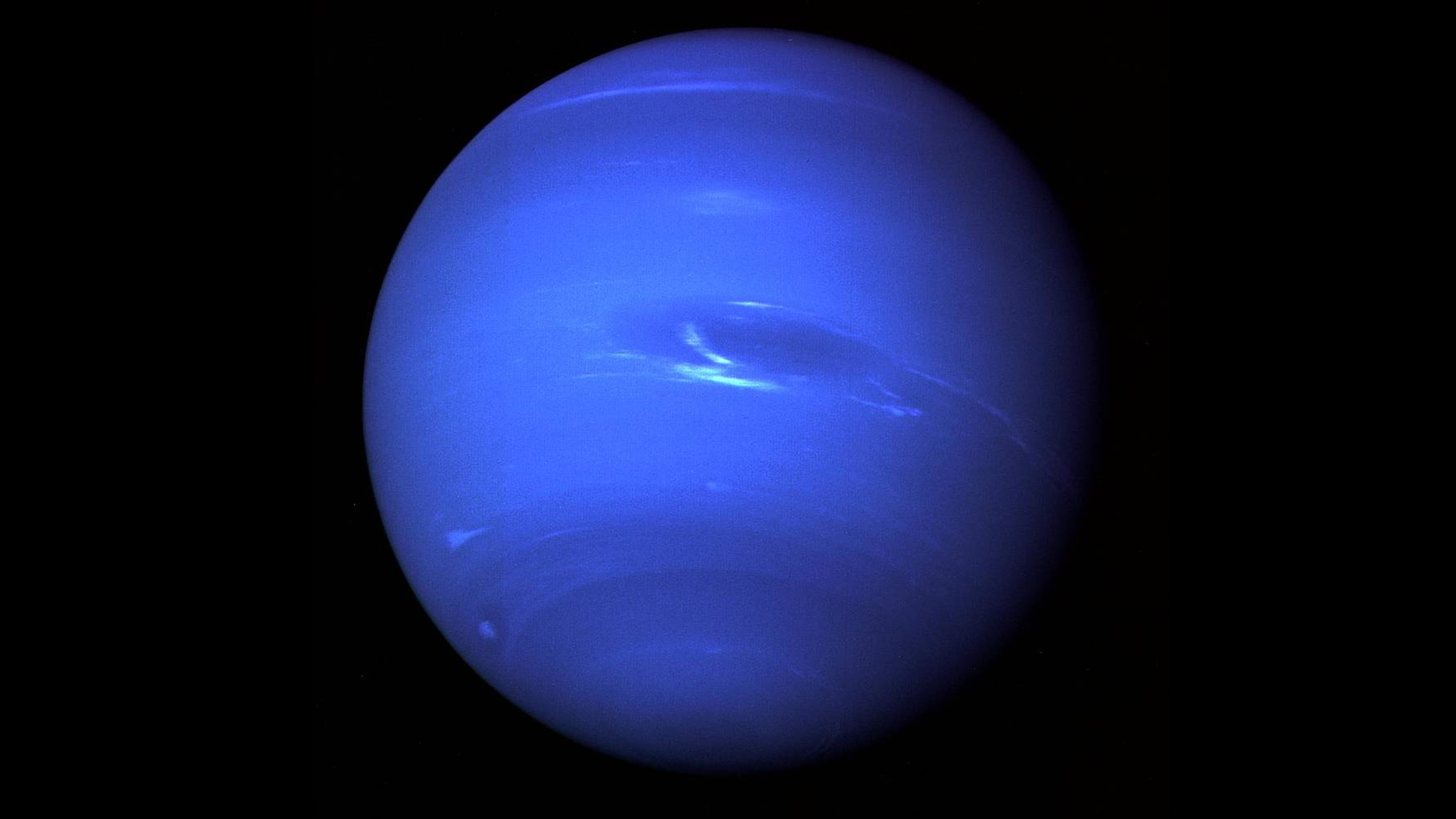
Neptune planet with blue color and dark spot

Neptune is a distant, dark blue planet with the fastest winds in the solar system and mysterious, disappearing storms.

๐ŸŒŒ Beyond Neptune

Beyond Neptune lies the Kuiper Belt — home to Pluto and other icy bodies — and beyond that, the theoretical Oort Cloud.

✅ Quick Planet Comparison Table

PlanetTypeFun Fact
MercuryRockyFastest orbit around the Sun
VenusRockyHottest surface in the solar system
EarthRockyOnly planet with known life
MarsRockyHas the tallest volcano (Olympus Mons)
JupiterGas GiantLargest planet, powerful magnetic field
SaturnGas GiantFamous for its beautiful ring system
UranusIce GiantSpins on its side
NeptuneIce GiantFastest winds in the solar system

Share this blog with your fellow space lovers ๐Ÿš€

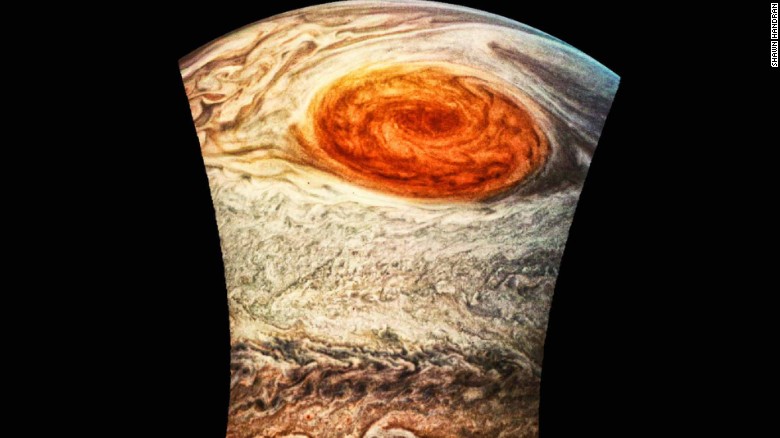
Jupiter and its Great Red Spot

NASA just discharged photographs of Jupiter that are clearer and nearer than any time in recent memory. From only 5,600 miles away (9,000 kilometers), NASA's Juno mission offers another take a gander at the planet's celebrated Great Red Spot storm. It's more than a spot, truly, as photograph examinations appear. Its 10,000 vast mists frame a tempest that is 1.3 times the measure of Earth. That mileage is additionally 10 times the range that mists traverse in Earth's biggest typhoons. NASA designed this examination of its own picture of Earth with a picture of Jupiter taken by space expert Christopher Go. A lot of research circling Jupiter is committed to understanding the spot. The pictures, prepared by NASA researchers, demonstrate the distinctive mists and mind boggling veins brightly delineating the eye of the tempest.
Saturn View
Saturn view
"This great tempest has seethed on the nearby planetary group's greatest planet for a considerable length of time. Presently, Juno and her cloud-infiltrating science instruments will jump into perceive how profound the foundations of this tempest go, and enable us to see how this mammoth tempest functions and what makes it so uncommon,"
Bolton drives a huge group of 32 co-examiners and 28 key work force committed to the mission Juno, which is the most distant sun oriented controlled shuttle from Earth. Made out of eight instruments, the mission snapped photographs and data that will lead scientists underneath the surface of the tempest, which has been observed since 1830. NASA says the spot might be more than 350 years old.Bolton drives a gigantic group of 32 co-examiners and 28 key work force committed to the mission Juno, which is the most distant sun oriented fueled rocket from Earth.
Made out of eight instruments, the mission snapped photographs and data that will lead scientists beneath the surface of the tempest, which has been checked since 1830. NASA says the spot might be more than 350 years old.Data gathered can help enlighten all the more concerning the beginning, development and current effect of Jupiter. As the nearby planetary group's biggest planet, it can extraordinarily impact the circle of articles in space, including planets and asteroids.There's likewise would like to take in more about the planet's compound arrangement and attractive field. NASA says Jupiter has a comparable organization to the sun and that the two were conformed to a similar time. These pictures from Monday are recently the start of researchers' anticipates Juno, which made it to Jupiter on July 4, 2016 - about five years after the mission was propelled from Florida in August 2011. Since its entry, it's gone around 71 million miles around the planet.
Saturn
satellite on saturn

Bolton's group at NASA's Jet Propulsion Laboratory in California is currently looking toward Juno's next closeup flyby of Jupiter, slated for Sept. 1 this year./Orginal post of Cnn/

Obama will tell the truth about UFO

President Obama could be the world leader who is talked about for thousands of years, if, as many conspiracy theorists believe he is about to do, he reveals the existence of aliens to the globe before stepping down.
Alien,Jesus Christ and President Obama/Phot by Getty
A growing range of supposed alien speech act campaigners believe 2016 we have a tendency toll be} the year we square measure told the reality IS out there following years of alleged secrecy over a supposed contact between alien guests and world governments.
Stephen Bassett, the sole registered apparition speech act persuader within the United States and executiveof Paradigm analysis cluster (PRG), has spent years cause to finish what he calls a “truth embargo”.

Express.co.uk unconcealed back in might however he believed President Obama would find yourself a honourwinner for creating the announcement 1st this year.
In a new video interview on Earth Mystery News, adult male Bassett aforementioned the announcement, if it materialises, would be "more profound than the approaching of Good Shepherd.
He said: "The 1st head of state that produces the announcement that extraterrestrial presence is real are going to be one in every of the best political legacies of all time.

Orginal source:express.co.uk

U.F.O. FILES: THE UNTOLD STORY

Though officials have long denied thatthey take 'flying saucers' seriously, declassified documents now reveal I extensive Government concern over the phenomenon.
Full article by Patric Hyghe : 

GPM Satellite Examines Tornadic Thunderstorms

Credit:Nasa
The Global Precipitation Measurement, or GPM, mission center satellite, a joint mission in the middle of NASA and the Japan Aerospace Exploration Agency, measured substantial precipitation in serious tempests right off the bat Friday, April 1, in the southern U.S. In the course of the most recent couple of days tornado producing electrical storms have happened in the conditions of Texas, Oklahoma, Arkansas, Louisiana, Indiana, Mississippi, Alabama and Georgia. Expansive hail, harming winds and glimmer flooding connected with a frontal framework moving over the United States have aggravated the harm from these tempests. Hail the measure of a half-dollar was accounted for close Jackson, Louisiana, on Thursday evening, March 31.The GPM center observatory satellite flew over this stormy region on March 31, 2016, at 10:41 p.m. EDT (April 1, 2016, 2:41 a.m. UTC). Tornadoes were accounted for in Mississippi, Alabama and Georgia amid the night. A tornado was accounted for close Hartselle, Alabama, not exactly a hour prior to the satellite ignored. A precipitation examination was gotten from information gathered by GPM's Microwave Imager (GMI) and Dual-Frequency Precipitation Radar (DPR) instruments. The GPM radar (DPR) measured downpour falling at the great rate of more than 91 mm (3.6 inches) every hour in an intense tempest east of Chattanooga, Tennessee. At NASA's Goddard Space Flight Center in Greenbelt, Maryland, information from the GPM satellite's radar (GPM Ku band) were utilized to uncover the three dimensional structure of precipitation in tempests underneath the satellite. GPM's radar observed that tempest tops in Alabama were achieving statures above 12 km (7.4) miles. The areas of extraordinary tempests were likewise uncovered by this 3-D cut which indicates radar echoes more prominent than 25 dBZ (decibels Z).The National Weather Service Weather Prediction Center in College Park, Maryland, issued their Short Range Forecast Discussion at 1:28 a.m. EDT on April 1. The discourse called for overwhelming precipitation and solid rainstorms in the southeastern U.S. states throughout the day. The NWS dialog said: A frosty front intersection the East Coast today evening time is relied upon to bring various gives and tempests from the Northeast to Florida. Some of these electrical storms might be serious crosswise over segments of the southeastern U.S. through early Saturday, April 2. There is likewise the likelihood of some blaze flooding in this same general territory where one to three inches of precipitation will be conceivable, with locally higher sums./Nasa.Gov orginal post/

Saturn Askew

Credit:Nasa
As a tradition for open discharge, Cassini pictures of Saturn are by and large arranged so Saturn seems north up, yet the rocket sees the planet and its far reaching rings from a wide range of edges. Here, a half-lit Saturn sits to one side as modest Dione (698 miles or 1,123 kilometers over) looks on from lower left. What's more, the eliminator, which isolates night from day on Saturn, is additionally to one side, inferable from the planet's way to deal with northern summer solstice. Subsequently, the planet's northern shaft is in daylight all consistently, much as it would be on Earth amid northern summer.This perspective looks toward the sunlit side of the rings from around 7 degrees over the ring plane. The picture was brought with the Cassini shuttle wide-point camera on Feb. 19, 2016 utilizing a phantom channel that specially concedes wavelengths of close infrared light focused at 752 nanometers. North on Saturn is up and pivoted 20 degrees to one side.The perspective was gotten at a separation of roughly 1.2 million miles (1.9 million kilometers) from Saturn. Picture scale is 68 miles (110 kilometers) per pixel.The Cassini mission is a helpful undertaking of NASA, ESA (the European Space Agency) and the Italian Space Agency. The Jet Propulsion Laboratory, a division of the California Institute of Technology in Pasadena, deals with the mission for NASA's Science Mission Directorate, Washington. The Cassini orbiter and its two locally available cameras were planned, created and collected at JPL. The imaging operations focus is based at the Space Science Institute in Boulder, Colorado. /Nasa.Gov orginal post/

Weekly Recap From the Expedition Lead Scientist

Credit:Nasa
As three new team individuals settled in on the International Space Station, the circling research facility got another guest – Orbital ATK's Cygnus case dispatched from the Kennedy Space Center March 23, conveying imperative supplies and many new exploratory examinations. NASA space traveler Jeff Williams, who started his six-month stay at the station a week ago, additionally started his human examination examinations with his first example accumulations for the Canadian Space Agency's (CSA) Bone Marrow Adipose Reaction: Red Or White (MARROW) examination concerning the impact of microgravity on human bone marrow. Fat cells and blood-creating cells have the same space in bone marrow. Amid delayed bed lay on Earth, the fat cells develop to the detriment of blood-delivering cells. Researchers need to learn if changes in bone marrow fat in space can clarify variations from the norm recognized in platelets in microgravity. MARROW measures fat changes in the bone marrow prior and then afterward presentation to microgravity. This exploration is creating the primary information on bone marrow fat changes in microgravity, a crucial organ in charge of the generation of all red and white platelets. Also, this examination measures particular changes of red and white platelet capacities. Bone marrow fat is measured utilizing attractive reverberation. Red platelet capacity is measured with a breath test dissected with a gas chromatograph, which isolates the segments of the example. White platelet capacity is concentrated on through the cells' hereditary expression. Williams finished his air (breath and encompassing air) and blood testing sessions. Information from this study might prompt medications that would empower more secure human space investigation and better recuperation from delayed bed lay on Earth. ESA (European Space Agency) space explorer Tim Peake proceeded with more human examination examinations, finishing another round of the Space Headaches study. The illness is a typical consistent amid spaceflight and can impact group execution amid a mission. The ESA examination hunt down approaches to enhance the condition and create techniques to lighten side effects and enhance the wellbeing and security of group individuals. Information from the examination could give knowledge to the condition on Earth and offer millions who some assistance with suffering from cerebral pains. Before beginning on his human examination session, Peake finished a round of test keeps running of the SPHERES-Universal Docking Port (SPHERES-UDP). Circles remains for Synchronized Position Hold, Engage, Reorient, Experimental Satellites. A noteworthy effort instrument and additionally a proving ground for exploratory examination, SPHERES are little, knocking down some pins ball-sized satellites intended for nothing flight inside the space station. They are fitted with docking ports to address huge numbers of the difficulties of uniting self-governing rocket in microgravity. Mated rocket can gather complex frameworks in circle or consolidate sensors and actuators for satellite overhauling and repurposing missions. The advancement of automated overhauling can be connected to Earth, for example, amid missions to an uncharted segment of the sea floor or the development and repair of submerged pipelines./Nasa.Gov orginal post/

Japanese spacecraft at Venus

A Japanese rocket's hotly anticipated Venus crusade is at last going to start. Japan's Akatsuki test was initially expected to touch base at Venus in December 2010, however a motor disappointment brought on the shuttle to miss its objective and zoom off into space around the sun. Be that as it may, this past December, Akatsuki's handlers figured out how to direct the specialty back to Venus, and now the test is just about prepared to begin science operations.

"Akatsuki has been turning so as to perform test perceptions on its locally available perception instruments one by one," Japan Aerospace Exploration Agency (JAXA) authorities wrote in a report on Friday (April 1). "The instruments are beginning up ordinarily, and we have as of now directed effective perceptions that are comparable to a 'base achievement,'" they included. "Along these lines we will move to consistent operations in mid-April." The $300 million Akatsuki shuttle, whose name signifies "first light" in Japanese, was intended to study Venus' mists, climate and environment very close utilizing six unique instruments. The test's perceptions ought to offer analysts some assistance with bettering see how Venus, which might have been very Earth-like billions of years prior, turned out to be so hot and apparently aloof to life, JAXA authorities have said. The first arrangement called for Akatsuki to circle Venus once at regular intervals, at a most extreme separation (apoapsis) of around 50,000 miles (80,000 kilometers). Yet, the additional opportunity keep running at Venus put the test in a 13-day circle that took Akatsuki to the extent 273,000 miles (440,000 km) from the planet's surface, JAXA authorities said. In the course of recent months, Akatsuki has been attempting to get to a less circular circle; JAXA has expressed that it needs the test to be in a nine-day circle with an apoapsis of around 193,000 miles (310,000 km) when standard operations start. Akatsuki ought to still have the capacity to perform the greater part of its unique science objectives from such a circle, JAXA authorities have said. The vessel dispatched in May 2010 alongside JAXA's Ikaros test, which turned into the principal shuttle ever to send and utilize a sunlight based sail in interplanetary space. 

/Space.com orginal post/

NASA’s Spitzer Maps Climate Patterns on a Super-Earth

Credit:Nasa
Perceptions from NASA's Spitzer Space Telescope have prompted the main temperature guide of a super-Earth planet - a rough planet about two times as large as our own. The guide uncovers extreme temperature swings from one side of the planet to the next, and insights that a conceivable purpose behind this is the vicinity of magma flows."Our perspective of this planet continues developing," said Brice Olivier Demory of the University of Cambridge, England, lead creator of another report showing up in the March 30 issue of the diary Nature. "The most recent discoveries let us know the planet has hot evenings and fundamentally more sweltering days. This shows the planet wastefully transports heat around the planet. We propose this could be explained by an air that would exist just on the day side of the planet, or by magma streams at the planet surface." The toasty super-Earth 55 Cancri e is generally near Earth at 40 light-years away. It circles near its star, whipping around it like clockwork. Due to the planet's proximity to the star, it is tidally bolted by gravity generally as our moon is to Earth. That implies one side of 55 Cancri, alluded to as the day side, is always cooking under the extreme warmth of its star, while the night side stays oblivious and is much cooler. "Spitzer watched the periods of 55 Cancri e, like the periods of the moon as seen from the Earth. We could watch the main, last quarters, new and full periods of this little exoplanet," said Demory. "Consequently, these perceptions offered us some assistance with building a guide of the planet. This guide illuminates us which locales are hot on the planet." Spitzer gazed at the planet with its infrared vision for a sum of 80 hours, watching it circle the distance around its star numerous times. These information permitted researchers to guide temperature changes over the whole planet. Shockingly, they found a sensational temperature distinction of 2,340 degrees Fahrenheit (1,300 Kelvin) from one side of the planet to the next. The most sweltering side is almost 4,400 degrees Fahrenheit (2,700 Kelvin), and the coolest is 2,060 degrees Fahrenheit (1,400 Kelvin). The certainty Spitzer observed the night side to be essentially colder than the day side means warmth is not being conveyed around the planet extremely well. The information contends against the idea that a thick environment and winds are moving warmth around the planet as beforehand thought. Rather, the discoveries recommend a planet without a huge air, and perhaps allude to a magma world where the magma would get to be solidified on the night side and not able to transport heat. "The day side could have waterways of magma and enormous pools of extremely hot magma, however we think the night side would have set magma streams like those found in Hawaii," said Michael Gillon, University of Liรจge, Belgium. The Spitzer information additionally uncovered the most sultry spot on the planet has moved over a bit from where it was expected to be: straightforwardly under the bursting star. This shift either demonstrates some level of warmth distribution restricted to the day side, or indicates surface components with extremely high temperatures, for example, magma streams. Extra perceptions, including from NASA's up and coming James Webb Space Telescope, will affirm the genuine way of 55 Cancri e. The new Spitzer perceptions of 55 Cancri are more itemized because of the telescope's expanded affectability to exoplanets. In the course of recent years, researchers and designers have made sense of new ways to improve Spitzer's capacity to gauge changes in the shine of exoplanet frameworks. One technique includes decisively portraying Spitzer's identifiers, particularly measuring "the sweet spot" - a solitary pixel on the finder - which was resolved to be ideal for exoplanet concentrates on. "By comprehension the qualities of the instrument - and utilizing novel alignment systems of a little area of a solitary pixel - we are endeavoring to squeeze out all of science conceivable from an identifier that was not intended for this kind of high-exactness perception," said Jessica Krick of NASA's Spitzer Space Science Center, at the California Institute of Technology in Pasadena. NASA's Jet Propulsion Laboratory (JPL) in Pasadena, California, deals with the Spitzer Space Telescope mission for NASA's Science Mission Directorate, Washington. Science operations are directed at the Spitzer Science Center. Rocket operations are based at Lockheed Martin Space Systems Company, Littleton, Colorado. Information are chronicled at the Infrared Science Archive housed at the Infrared Processing and Analysis Center at Caltech. Caltech oversees JPL for NASA. /Nasa.Gov orginal post/

Youngest Supernova Identified on Milky Way

Credit:Nasa
Researchers have utilized information from NASA's Chandra X-beam Observatory and the NSF's Jansky Very Large Array to decide the probable trigger for the latest supernova in the Milky Way. They connected another system that could have suggestions for comprehension other Type Ia supernovas, a class of stellar explosions that researchers use to decide the expansion rate of the Universe. Cosmologists had beforehand distinguished G1.9+0.3 as the leftover of the latest supernova in our Galaxy. It is evaluated to have happened around 110 years prior in a dusty area of the Galaxy that blocked unmistakable light from achieving Earth. G1.9+0.3 has a place with the Type Ia classification, a vital class of supernovas exhibiting solid examples in their brilliance that make them significant instruments for measuring the rate at which the universe is expanding. "Space experts use Type Ia supernovas as separation markers over the Universe, which offered us some assistance with discovering that its expansion was quickening," said Sayan Chakraborti, who drove the learn at Harvard University. "On the off chance that there are any distinctions in how these supernovas explode and the measure of light they deliver, that could affect our comprehension of this expansion." Most researchers concur that Type Ia supernovas happen when white diminutive people, the thick leftovers of Sun-like stars that have come up short on fuel, explode. In any case, there has been an open deliberation over what triggers these white midget explosions. Two essential thoughts are the aggregation of material onto a white smaller person from a partner star or the fierce merger of two white diminutive people.The new research with authentic Chandra and VLA information examines how the expanding supernova leftover G1.0+0.3 cooperates with the gas and tidy encompassing the explosion. The subsequent radio and X-beam emanation give intimations with regards to the reason for the explosion. Specifically, an expansion in X-beam and radio splendor of the supernova leftover with time, as per hypothetical work by Chakraborti's group, is expected just if a white smaller person merger occurred. "We watched that the X-beam and radio shine expanded with time, so the information guide unequivocally toward a crash between two white smaller people just like the trigger for the supernova explosion in G1.9+0.3," said co-creator Francesca Childs, likewise of Harvard. The outcome infers that Type Ia supernovas are either all brought about by white diminutive person impacts, or are created by a mixture of white smaller person crashes and the instrument where the white midget pulls material from a partner star. "It is essential to distinguish the trigger instrument for Type Ia supernovas in light of the fact that if there is more than one cause, then the commitment from each might change after some time," said Harvard's Alicia Soderberg, another co-creator on the study. This implies space experts may need to recalibrate a percentage of the ways we utilize them as 'standard candles' in cosmology." The group additionally determined another appraisal for the age of the supernova leftover of around 110 years, more youthful than past evaluations of around 150 years. More advance on comprehension the trigger instrument ought to originate from concentrating on Type Ia supernovas in close-by galaxies, utilizing the expanded affectability gave by a late move up to the VLA.A paper depicting these outcomes showed up in the March first, 2016 issue of The Astrophysical Journal and is accessible on the web. NASA's Marshall Space Flight Center in Huntsville, Alabama, deals with the Chandra program for NASA's Science Mission Directorate in Washington. The Smithsonian Astrophysical Observatory in Cambridge, Massachusetts, controls Chandra's science and flight operations. /Nasa.Gov orginal post/

NASA’s Astrobiologist Is Spelunking for Alien Life on Earth

Credit: Nasa
Penny Boston
You live on an Alien world. Like, actually on it. Underneath your feet, hollows, mines, and chasms are loaded with life that is drastically not quite the same as the stuff at first glance. So distinctive, truth be told, that NASA utilizes those lifeforms as a manual for its exploration of the universe.
Penny Boston is the new chief of NASA's Astrobiology Institute. Her employment, when it starts on May 31, will be prompting the office in its quest for life on different universes. What's more, trust it, there are a lot of applicants past Earth. Mars gets the most blazing press, yet Saturn's moons Enceledus and Titan are both prime applicants, similar to Jupiter's Europa. Indeed, even buckle life on the Moon is not impossible. Boston has a couple of more months to appreciate kicking around the collapses her present post as Director of Cave and Karst Science at New Mexico Tech. She required some serious energy out of her spelunking to visit with WIRED about her new gig, the globetrotting occupation of a hole researcher, and what life may look like on different universes.

So do you truly work in a hollow throughout the day?
When I'm not covered by printed material, yes. I do a ton of work in subsurface and hollow exploration and some work in mines, which are human-made caverns. That gives us a window into Earth's subsurface, where a mess of science is going on.

Why is life in hollows so intriguing?
There's a tremendous measure of it, for one thing. There's a whole shrouded some portion of planet that we don't consider. The stone crack living space goes down to 5 kilometers, possibly down to 10, and is completely swarmed with life shapes. We think the colossal spots for biodiversity are woods and corals, however so does the stone crack natural surroundings, and holes let us get in there. In the subsurface world, there are such a large number of various ways of bringing home the bacon. Surface life has photosynthesis, however subsurface just a little part of that vitality streams down. Not a considerable measure of life forms are utilizing natural material, they are preparing minerals from rock they live in.

In what capacity can give in science show us about existence on different universes?
These life forms that live off minerals and not photosynthetically could be a model for another way life on Mars or Europa or who knows where else. As I went on proof got to be clearer and clearer of caverns on Mars, the Moon, and different satellites. It helps us truly to extend our creative energy as we attempt to do life discovery missions. There is colossal enthusiasm for frosty moons with fluid insides circling around gas mammoths. I consider them not as sea universes, but rather planet estimated hollow universes.

What places in the close planetary system would you say you are most excited about?
There's various magnificent potential outcomes. Mars has accumulated a tremendous measure of consideration. There is enormous enthusiasm for what individuals are calling sea universes, places like Europa and Enceladus, the frosty moons with fluid insides circling around gas goliaths. By and by, I consider them not as sea universes, but rather planet estimated cavern universes.

What's more, you specified that this life won't not look anything like what we have on Earth. What do you search for?
Life is great at making itself more systematic within than outside. Life is similar to an entropy exporting machine, it keeps thermodynamics contained. Life takes vitality from some structure from nature and utilizations it to make structure. Be that as it may, the points of interest of the science could possibly look like us. I think creatures most likely have an inside and an outside, so they're presumably discernable from their environment. There might be life that lives on altogether different timescales, life forms that are moderate in their development designs. Pondering the essentials of what makes life advises us about how to go search for it.

What happens in the event that some individual does discover life out there?
Indeed, first I'm anticipating setting up a major gathering. And afterward we need to consider deliberately how to study it without doing harm. This is a zone where NASA is committed by a global settlement on planetary insurance. Right on time in the space age, our forerunners comprehended we would not like to defile different bodies with Earth life. What's more, despite the fact that the odds are low of harmful impacts of Alien life coming here, regardless we need to take extraordinary measures to ensure nothing terrible returns to Earth. I have served for various years on NASA's Planetary Protection subcommittee. On the off chance that life is like Earth life, we have to make sense of on the off chance that it is comparable in light of the fact that that is the manner by which the universe makes life, or on the grounds that early lifeforms got a ride starting with one planet then onto the next. At that point, on the off chance that we find another sort of life, we need to inquire as to whether it is like us, or distinctive. Has life emerged one time, or more than one time? We know, for example, that Mars and Earth exchange material. It's a sloppy circumstance. On the off chance that life is like Earth life, we have to make sense of in the event that it is comparative since that is the means by which the universe makes life, or on the grounds that early lifeforms got a ride starting with one planet then onto the next.

Your new occupation is in Silicon Valley. What are you going to do to scratch your tingle to go surrendering?
All things considered, there are some magnificent gives in somewhere else in California. Some fantastic marble collapses the Sierra Nevadas. My work has taken me all over world: locales in the Atacama in Chile, in Ukraine, Sardinia, great collapses Mexico. Furthermore here where I'm as of now living in the American southwest. When I'm in the workplace in Silicon Valley my heart won't be a long way from huge numbers of those destinations. So as to be a powerful individual I have to stay in contact with my roots in science and the common world.

Alright, give in science is beginning to sound sort of cool. Will you truly offer it however?
I need to let you know that one of enormous attractions to me for working in cavern environment was so couple of other individuals were doing it. It's an immeasurable, to a great extent unexplored investigative fortune trove. All covered up. One of my most loved destinations is in Saudi Arabia. You're in this huge sand desert district they call the Empty Quarter. Yet there are hollows there that contain bits of life, these jump capable pools with a wide range of life that hasn't seen the surface for quite
along time and years. The geochemistry, the mineralogy, is amazing. You can be in a wonderland with certifiable experimental worth, and it is a to a great extent unexplored domain.

One of your different obligations at this new employment is to teach and move the next era of astrobiologists. How would you do that?

It's not something you need to work hard to offer youngsters on. Youngsters have a desire for exploration. Whether that is physical and they need to go climb the Appalachian trail, or scholarly and they need to explore space.  /wired.com orginal post/
Big Fish Fossil On Mars

Credit:Nasa
A UFO seeker and blogger guarantees that he has found a fossilized fish in one of the most recent pictures sent back to Earth by NASA's Curiosity Rover on Mars. Scott C. Waring distributed an article on his online journal, UFO Sightings Daily, on Thursday where he said that he observed what gives off an impression of being a petrified fish lying on the Martian surface in a great photo as of late discharged by NASA. The picture being referred to was caught utilizing Curiosity's route camera on March 23 in the region of SOL 1290. Waring brought up that the Martian fish appears to be a large portion of a meter long, which he said is in regards to the measure of a little salmon or a bass. Its balance edge and tail blade are additionally noticeable on the photo. Waring included that picture of the fish on Mars could serve as a proof that NASA's disclosure of seas on the Red Planet could in all likelihood be valid. "I do feel NASA ran over the edge with their 2 billion dollar angling hardware to catch this one, yet it's rebelliously worth mounting on the divider," Waring said. This is not the first run through interesting articles were evidently found on the Martian surface in light of pictures recorded by the Curiosity Rover.

In November 2015, beginner space expert Joe White posted a video on YouTube around a monster mouse that was captured in Mars' Gale Crater. Waring likewise expounded on a bear-like animal that was found by a kindred UFO seeker on another picture of the Red Planet in October. He said that it demonstrated the existence of living animals on Mars. Regardless of these declarations by UFO seekers, NASA said that it has yet to discover solid confirmation of life structures on Mars. The space office likewise denied that it is concealing such discoveries from the general population."There is no gathering that would be more content to see a wonder such as this than the 500 researchers around the globe who take a shot at this Curiosity meanderer," Ashwin Vasavada, an individual from NASA's Mars wanderer project, said. "So far we haven't seen anything that is obvious to the point that it is like what these cases are." /techtimes.com orginal post/

A Billion Years Old Alien Technology

The creator of "Alien Minds", Susan Schneider of the University of Pennsylvania, has proposed a "more noteworthy time of Alien civic establishments" contention that says that "if extraterrestrial developments are millions or billions of years more seasoned than us, numerous future immeasurably more clever than we are. By all accounts, numerous future superintelligent. We are galactic infants."
"I think it likely – truth be told, inescapable – that organic insight is just a passing marvel… If we ever experience extraterrestrial knowledge, I trust it is prone to be postbiological in nature, composes Arizona State's Paul Davies in The Eerie Silence. Widely acclaimed experts from physicist Sir Martin Rees of Cambridge University to astrobiologist Davies have inquired as to whether we were to experience Alien innovation far better than our own, would we even acknowledge what it was. An innovation a million or more years ahead of time of our own would seem marvelous. Actually, Davies proposes in Eerie Silence, that best in class innovation won't not be made of matter. That it may have no fixed size or shape; have no very much characterized limits. Is dynamical on all sizes of space and time. Then again, alternately, does not seem to do anything at all that we can recognize. Does not comprise of discrete, separate things; yet rather it is a framework, or an unobtrusive larger amount connection of things. Are matter and data, Davies asks, all there is? Five hundred years back, Davies composes, " the very idea of a gadget controlling data, or programming, would have been tremendous. Might there be a still larger amount, up 'til now outside all human experience, that arranges electrons? Assuming this is the case, this "third level" could never be show through perceptions made at the educational level, still less at the matter level. We ought to be interested in the particular plausibility that best in class Alien innovation a billion years old might work at the third, or maybe even a fourth or fifth level - all of which are absolutely vast to the human personality at our present condition of development in 2012. Susan Schneider of the University of Pennsylvania seems to concur. She is one of only a handful couple of masterminds—outside the domain of sci-fi—that have considered the thought that manmade brainpower is now out there, and has been for ages.

In a video presentation at NASA Astrobiology, Alien Minds, Schneider asks "How might wise Aliens think? Would they have cognizant experiences? Would it feel a specific way to be an Alien?" Knowing that we are not the only one in the universe would be a significant acknowledgment, and contact with an Alien development could deliver astonishing mechanical advancements and social bits of knowledge.Schneider asks: in what capacity may Aliens think? What's more, would they be cognizant? I don't trust that most exceptional Alien civic establishments will be organic, Schneider says. The most complex civic establishments will be postbiological, types of computerized reasoning or Alien superintelligence. Hunt down Extraterrestrial Intelligence (SETI) programs have been hunting down organic life. Our way of life has since a long time ago delineated Aliens as humanoid animals with little, pointy jaws, huge eyes, and huge heads, obviously to house brains that are bigger than our own. Paradigmatically, they are "minimal green men." While we know that our way of life is humanizing, Schneider envisions that her proposal that Aliens are supercomputers might strike us as fantastical. So what is her reason for the perspective that most wise Alien developments will have individuals that are superintelligent AI .Schneider offers three perceptions that together, bolster her decision for the existence of Alien superintelligence. The first is "the short window perception": Once a general public makes the innovation that could place them in contact with the universe, they are just a couple of hundred years away from changing their own particular worldview from science to AI. This "short window" makes it more probable that the Aliens we experience would be postbiological. The short window perception is upheld by human social advancement, at any rate so far. Our first radio signs go back just around a hundred and a quarter century, space exploration is just around fifty years old, yet we are now inundated in advanced innovation. Schneider's second contention is "the more prominent time of Alien human advancements." Proponents of SETI have frequently presumed that Alien developments would be much more seasoned than our own particular "… all lines of proof merge on the conclusion that the maximum time of extraterrestrial insight would be billions of years, particularly [it] ranges from 1.7 billion to 8 billion years. On the off chance that civic establishments are millions or billions of years more seasoned than us, numerous eventual tremendously more smart than we are. By all accounts, numerous eventual superintelligent. We are galactic children. In any case, would they be types of AI, and additionally types of superintelligence? Schneider says, yes. Regardless of the fact that they were organic, simply having natural mind improvements, their superintelligence would be come to by counterfeit means, and we could see them as being "manmade brainpower." In any case, she suspects an option that is more grounded than this: that they won't be carbon-based. Transferring permits an animal close eternality, empowers reboots, and permits it to get by under an assortment of conditions that carbon-based life frames can't. What's more, silicon seems, by all accounts, to be a superior medium for data preparing than the mind itself. Neurons achieve a crest velocity of around 200 Hz, which is seven requests of size slower than current chip./ dailygalaxy.com orginal post/

The Earth’s Mantle

Like the various physical planets, (Mercury, Venus, and Mars) the Earth is comprised of numerous layers. This is the consequence of it experiencing planetary separation, where denser materials sink to the inside to shape the center while lighter materials structure around the outside. Though the center is made basically out of iron and nickel, Earth's upper layer are made out of silicate rock and minerals. This district is known as the mantle, and records for most by far of the Earth's volume. Development, or convection, in this layer is additionally in charge of the greater part of Earth's volcanic and seismic movement. Data about structure and arrangement of the mantle is either the aftereffect of geophysical examination or from direct investigation of rocks got from the mantle, or exposed mantle on the sea floor.
Definition: Made out of silicate rough material with a normal thickness of 2,886 kilometers (1,793 mi), the mantle sits between the Earth's hull and its upper center. The mantle makes up 84% of the Earth by volume, contrasted with 15% in the center and the rest of taken up by the outside. While it is overwhelmingly strong, it carries on like a gooey liquid because of the way that temperatures are near the dissolving point in this layer. Our insight into the upper mantle, including the tectonic plates, is gotten from examinations of earthquake waves; heat stream, attractive, and gravity studies; and research facility experiments on rocks and minerals. Somewhere around 100 and 200 kilometers underneath the Earth's surface, the temperature of the stone is close to the liquefying point; liquid rock emitted by a few volcanoes begins in this locale of the mantle.
Structure and Composition: The mantle is partitioned into areas which are based upon results from seismology. These are the upper mantle, which extends from around 7 to 35 km (4.3 to 21.7 mi) starting from the surface to a profundity of 410 km (250 mi); the move zone, which extends from 410 t0 660 km (250 – 410 mi); the lower mantle, which comes to from 660 km to a profundity of 2,891 km (410 – 1,796 mi); and the center mantle limit, which has a variable thickness (~200 km or 120 mi by and large). In the upper mantle two fundamental zones are recognized. The deepest of these is the inward asthenosphere, which is made out of plastic streaming rock of that midpoints around 200 km (120 mi) in thickness. The external zone is the lowermost part of the lithosphere, which is made out of inflexible shake and is around 50 to 120 km (31 to 75 mi) thick. The upper part of the lithosphere is the Earth's hull, a slight layer that is around 5 to 75 km (3.1 to 46.6 mi) thick, which is isolated from the mantle by the Mohorovicic brokenness (or "Moho", which is characterized by a sharp increment descending in the pace of earthquake waves). In a few spots under the sea, the mantle is really exposed. There are additionally a couple places ashore where mantle rock has been pushed to the surface by tectonic movement, most remarkably the Tablelands locale of Gros Morne National Park in Newfoundland and Labrador, Canada, St. John's Island, Egypt, or the island of Zabargad in the Red Sea. As far as its constituent components, the mantle is comprised of 44.8% oxygen, 21.5% silicon, and 22.8% magnesium. There's additionally press, aluminum, calcium, sodium, and potassium. These components are all bound together as silicate shakes, all of which take the type of oxides. The most widely recognized is Silicon dioxide (SiO2) at 48%, trailed by Magnesium Oxide (MgO) at 37.8%. Examples of rocks that you may discover inside the mantle include: olivine, pyroxenes, spinel, and garnet.
Convection: Due to the temperature distinction between the Earth's surface and external center, there is a convective material flow in the mantle. This comprises of the moderate, inching movement of the Earth's silicate mantle over the surface, conveying heat from the inside of the Earth to the surface. While hot material ascents to the surface, cooler, heavier material sinks underneath. The lithosphere is separated into various plates that are constantly being made and expended at their inverse plate limits. Descending movement of material happens in subduction zones, areas at united plate limits where one mantle layer moves under another. Gradual addition happens as material is added to the developing edges of a plate, connected with ocean bottom spreading. This confused procedure is accepted to be an indispensable part of the movement of plates, which thus offers ascend to mainland float. Subducted maritime outside layer is additionally what offers ascend to volcanism, as exhibited by the Pacific Ring of Fire.

Exploration: Experimental examinations and exploration of the mantle is for the most part led on the seabed because of the relative thickness of the maritime outside contrasted with the mainland hull. The main endeavor at mantle exploration (known as Project Mohole) accomplished a most profound infiltration of approximately 180 meters (590 feet). It was deserted in 1966 after rehashed disappointments and expense over-runs. In 2005, the sea penetrating vessel JOIDES Resolution accomplished a borehole that was 1,416 meters (4,646 ft) top to bottom underneath the ocean bottom. In 2007, a group of researchers on board the UK research ship RRS James Cook led a study on an exposed area of mantle situated between the Cape Verdr Islands and the Caribbean Sea. As of late, a strategy for exploring the Earth's layers was proposed utilizing a little, thick, warm creating test. This would soften its way through the covering and mantle and impart by means of acoustic signs produced by its entrance of the stones. The test would comprise of an external shell of tungsten with a center of cobalt-60, which goes about as a radioactive warmth source.It was figured that such a test will achieve the maritime Moho in under 6 months and accomplish least profundities of well more than 100 km (62 mi) in a couple of decades underneath both maritime and mainland lithosphere. In 2009, a supercomputer application made a recreation that gave new understanding into the appropriation of mineral stores from when the mantle created 4.5 billion years back.While the Earth's mantle has yet to be explored at any critical profundity, much has been gained from backhanded studies in the course of recent hundreds of years. As human exploration of the Solar System proceeds with, we are certain to take in more about physical planets, their land conduct, and their arrangement.We have composed numerous articles about the Earth's inside here at Universe Today. Here's one about the Earth's Mantle, Discovery of the Earth's Inner, Inner Core, What Is The Difference Between Magma And Lava, and an article about how the Earth's Core Rotates Faster Than Its Crust./Universetoday.com prginal post/

Origins of the Universe

Credit:Nasa
The most famous hypothesis of our universe's birthplace focuses on an astronomical disaster unmatched in all of history—the huge explosion. This hypothesis was conceived of the perception that different galaxies are moving away from our own at awesome rate, in all bearings, as though they had all been moved by an antiquated explosive power. Before the huge explosion, researchers trust, the whole unfathomability of the noticeable universe, including the greater part of its matter and radiation, was packed into a hot, thick mass only a couple of millimeters over. This about unlimited state is estimated to have existed for only a small amount of the principal second of time. Enormous detonation advocates propose that around 10 billion to 20 billion years prior, a huge impact permitted all the universe's known matter and vitality—even space and time themselves—to spring from some old and obscure sort of vitality. The hypothesis keeps up that, in the moment—a trillion-trillionth of a second—after the enormous detonation, the universe expanded with unlimited pace from its rock size birthplace to galactic degree. Expansion has evidently proceeded, yet a great deal all the more gradually, over the resulting billions of years. Researchers can't make certain exactly how the universe advanced after the enormous detonation. Numerous trust that as time passed and matter cooled, more different sorts of iotas started to frame, and they in the long run dense into the stars and galaxies of our present universe.
Causes of the Theory

A Belgian cleric named Georges Lemaรฎtre initially proposed the theory of the universe's origin in the 1920s when he speculated that the universe started from a solitary primordial molecule. The thought in this manner got real supports by Edwin Hubble's perceptions that galaxies are dashing away from us in all headings, and from the revelation of enormous microwave radiation by Arno Penzias and Robert Wilson. The sparkle of inestimable microwave foundation radiation, which is found all through the universe, is thought to be an unmistakable remainder of extra light from the huge explosion. The radiation is much the same as that used to transmit TV signals by means of reception apparatuses. Be that as it may, it is the most established radiation known and might hold numerous insider facts about the universe's soonest minutes. The theory of the universe's origin leaves a few noteworthy inquiries unanswered. One is the first reason for the enormous detonation itself. A few answers have been proposed to address this key inquiry, yet none has been demonstrated—and even sufficiently testing them has turned out to be a considerable test./nationalgeographic.com orginal post/

Star explosion - Supernova

Credit:PETER CHALLIS
Flotsam and jetsam from a vast explosion chanced upon a neighboring star, another study reports, recommending that the surviving star may be in charge of its accomplice's death. The explosion, known as a sort 1a supernova, was found in 2012. It went off in a galaxy around 50 million light-years away in the star grouping Virgo. Cosmologists immediately saw more blue light originating from the supernova than expected. The excess light most likely originated from gas that was compacted and warmed as the stun wave kept running into another star, Howie Marion, a cosmologist at the University of Texas at Austin, and associates report online March 22 in the Astrophysical Journal. It's the main solid proof that some ordinary sort 1a supernovas have circling mates.Stargazers suspect that a sort 1a supernova is the explosion of a white diminutive person, the thick center abandoned after a few stars kick the bucket. What pulls the trigger is begging to be proven wrong. Two white diminutive people could winding together and explode. Alternately one white diminutive person could siphon gas off of a partner star until the white midget could no more bolster its own weight, setting off a ruinous spewing forth. Seeing shining gas from the stun wave hammering into a friend backings the thought that some white midgets eat until they explode. A year ago, analysts reported comparative perceptions from another supernova (SN: 6/27/15, p. 9), however that explosion was only one-thousandth as brilliant as a common sort 1a. It won't not be illustrative of all sort 1a supernovas, which are oftentimes utilized as separation markers that measure the expansion of the universe. / sciencenews.org orginal post/

Black hole raging red

Credit:ESO
Savage red flashes, enduring just portions of a second, have been seen amid one of the brightest dark opening upheavals lately. In June 2015, a dark opening called V404 Cygni experienced sensational lighting up for around two weeks, as it ate up material that it had peeled off a circling sidekick star. V404 Cygni, which is around 7,800 light years from Earth, was the main complete dark gap to be recognized in our Galaxy and can show up extremely splendid when it is effectively eating up material. In another study, distributed in the diary Monthly Notices of the Royal Astronomical Society, a global group of space experts, drove by the University of Southampton, report that the dark opening discharged stunning red flashes enduring just parts of a second, as it impacted out material that it couldn't swallow. The stargazers related the red shading with quick moving planes of matter that were catapulted from near the dark opening. These perceptions give new experiences into the development of such flies and extreme dark gap marvels. Lead creator of the study Dr Poshak Gandhi, Associate Professor and STFC Ernest Rutherford Fellow in the University of Southampton's Astronomy Group, remarks: "The rapid lets us know that the area where this red light is being radiated must be extremely smaller. Sorting out hints about the shading, speed, and the force of these flashes, we infer that this light is being radiated from the base of the dark gap plane. The starting point of these planes is still obscure, albeit solid attractive fields are suspected to assume a part.
"Moreover, these red flashes were observed to be most grounded at the top of the dark gap's nourishing craze. We guess that when the dark gap was by and large quickly forcibly fed by its friend circling star, it responded fiercely by regurgitating out a percentage of the material as a quick moving plane. The term of these glimmering scenes could be identified with the exchanging on and off of the plane, seen without precedent for subtle element."
Because of the erratic nature and uncommonness of these splendid dark gap 'upheavals', space experts have almost no opportunity to respond. For example, V404 Cygni last emitted in 1989. V404 Cygni was exceptionally splendid in June 2015 and gave an excellent chance to such work. Truth be told, this was one of the brightest dark opening upheavals as of late. Be that as it may, most upheavals are far dimmer, making them hard to examine. Every blaze was blindingly extreme, comparable to the force yield of around 1,000 suns. What's more, a portion of the flashes were shorter than 1/40th of a second - around ten times quicker than the length of time of a run of the mill flicker of an eye. Such perceptions require novel innovation, so cosmologists utilized the ULTRACAM quick imaging camera mounted on the William Herschel Telescope in La Palma, on the Canary Islands. Teacher Vik Dhillon, of the University of Sheffield and co-maker of ULTRACAM, said: "ULTRACAM is one of a kind in that it can work at rapid, catching high casing rate "motion pictures" of cosmic focuses, in three hues all the while. This permitted us to discover the red shade of these flashes of light from V404 Cygni."
 Dr Gandhi closed: "The 2015 occasion has enormously spurred cosmologists to organize overall endeavors to watch future upheavals. Their brief spans, and solid emanations over the whole electromagnetic range, require close correspondence, sharing of information, and communitarian endeavors amongst space experts. These perceptions can be a genuine test, particularly while endeavoring concurrent perceptions from ground-based telescopes and space satellites."

This examination was a joint effort between the colleges of Southampton, Sheffield and Warwick, together with global accomplices in Europe, USA, India and the UAE. The examination was upheld by the Science and Technology Facilities Council, the UK-India UKIERI-UGC Thematic Partnerships, the Royal Society, the Spanish Ministry of Economy and Competitiveness (MINECO), CONACyT (Mexico), and Spanish Ministerio de Educacion, Cultura y Deporte, a Marie Curie FP7-Reintegration-Grant and the University of Southampton./ sciencedaily orginal post/

New Map of Orion’s Horsehead Nebula

Credit : Nasa
NASA's Stratospheric Observatory for Infrared Astronomy, or SOFIA, has discharged another guide of the interstellar cloud called the Horsehead Nebula, situated in the group of stars Orion.
This new guide is made of 100 separate perspectives of the cloud, every mapping carbon particles at various speeds. Whenever joined, these diverse perspectives make a multi-faceted representation of the cloud. Every area on this new SOFIA guide of the cloud contains a far-infrared range of the gas and tidy there, permitting stargazers to examine the elements, science, temperatures, and speed inside of the cloud.
"We are satisfied to give this information to the world and more noteworthy academic group," said Erick Young, SOFIA science mission operations executive of NASA Ames Research Center, at Moffett Field, California. "Orion's Horsehead Nebula is a famous interstellar component and a prime research facility for contemplating star arrangement forms."
Researchers mentioned the objective facts utilizing an instrument called upGREAT – the overhauled German Receiver at Tereherz Frequencies. It utilizes 14 infrared locators at the same time, which builds the productivity of perceptions. A proportional guide made preceding the update would have required over 200 hours, however took just four hours of watching time, on account of upGREAT's affectability.

SOFIA is a Boeing 747SP jetliner changed to convey a 100-inch distance across telescope. It is a joint venture of NASA and the German Aerospace Center. NASA's Ames Research Center in Moffett Field, California, deals with the SOFIA project, science and mission operations in participation with the Universities Space Research Association headquartered in Columbia, Maryland, and the German SOFIA Institute (DSI) at the University of Stuttgart. The flying machine is based at NASA's Armstrong Flight Research Center's storage 703, in Palmdale, California. /Nasa.Gov orginal post/

Pluto: On Frozen Pond

Credit:Nasa
NASA's New Horizons shuttle saw a few elements on Pluto that offer confirmation of a period millions or billions of years prior when – on account of much higher weight in Pluto's air and hotter conditions at first glance – fluids may have streamed crosswise over and pooled on the surface of the far off world. "Notwithstanding this conceivable previous lake, we likewise see confirmation of channels that might likewise have conveyed fluids in Pluto's past," said Alan Stern, Southwest Research Institute, Boulder, Colorado—central specialist of New Horizons and lead creator of the logical paper.

This element has all the earmarks of being a solidified, previous pool of fluid nitrogen, situated in a mountain extend only north of Pluto's casually named Sputnik Planum. Caught by the New Horizons' Long Range Reconnaissance Imager (LORRI) as the rocket flew past Pluto on July 14, 2015, the picture demonstrates points of interest as little as around 430 feet (130 meters). At its amplest point the conceivable lake gives off an impression of being around 20 miles (30 kilometers) over. /Nasa.Gov orginal post/

Oxygen Tank Hardware-Nasa Project

Credit:Nasa
A fluid oxygen tank certainty article for NASA's new rocket, the Space Launch System, finishes last welding on the Vertical Assembly Center at Michoud Assembly Facility in New Orleans. This is the primary look at what one of the two tanks will resemble that make up the SLS center stage. Towering more than 200 feet tall with a distance across of 27.6 feet, the center stage will store cryogenic fluid hydrogen and fluid oxygen that will bolster the vehicle's RS-25 motors. Certainty equipment checks weld techniques are filling in as arranged and tooling-to-equipment interfaces are right. It will likewise be utilized as a part of adding to the application process for the warm assurance framework, which is the protection froth that gives the tank its orange shading. The fluid oxygen tank is the littler of the two tanks in the center stage. Parts of the fluid hydrogen tank certainty article finished welding in February at Michoud. All welding for the SLS center stage for the Block I design of the rocket - including certainty, capability and flight equipment - will be done this late spring in planning for its first flight with NASA's Orion shuttle in 2018.
/Nasa.Gov orginal post/